As much as ever, logistics in 2025 is driven by data. The rise of customer expectation, the increasing frequency of supply chain disruption, and the need for real-time visibility into all elements of your fleet and warehouse have made many companies reliant upon analytics platforms that provide advanced analytic capabilities.
Regardless of whether you have a large national distribution network or a smaller local operation, having an appropriate analytics solution will allow you to improve your workflow processes, route optimisation, reduce costs, and enable communication with customers at each point throughout the process. As speed and accuracy have become the two key drivers of success in today’s rapidly changing markets, analytics solutions for logistics have become a necessary component for competitive advantage.
Top Platforms Leading the Future of Logistics Analytics
Below is an assembled and filtered list of the best logistics analytics solutions in 2025 that have been evaluated against innovation, user-friendliness, scalability, and their added value to logistics operations.
#1: Leta.ai
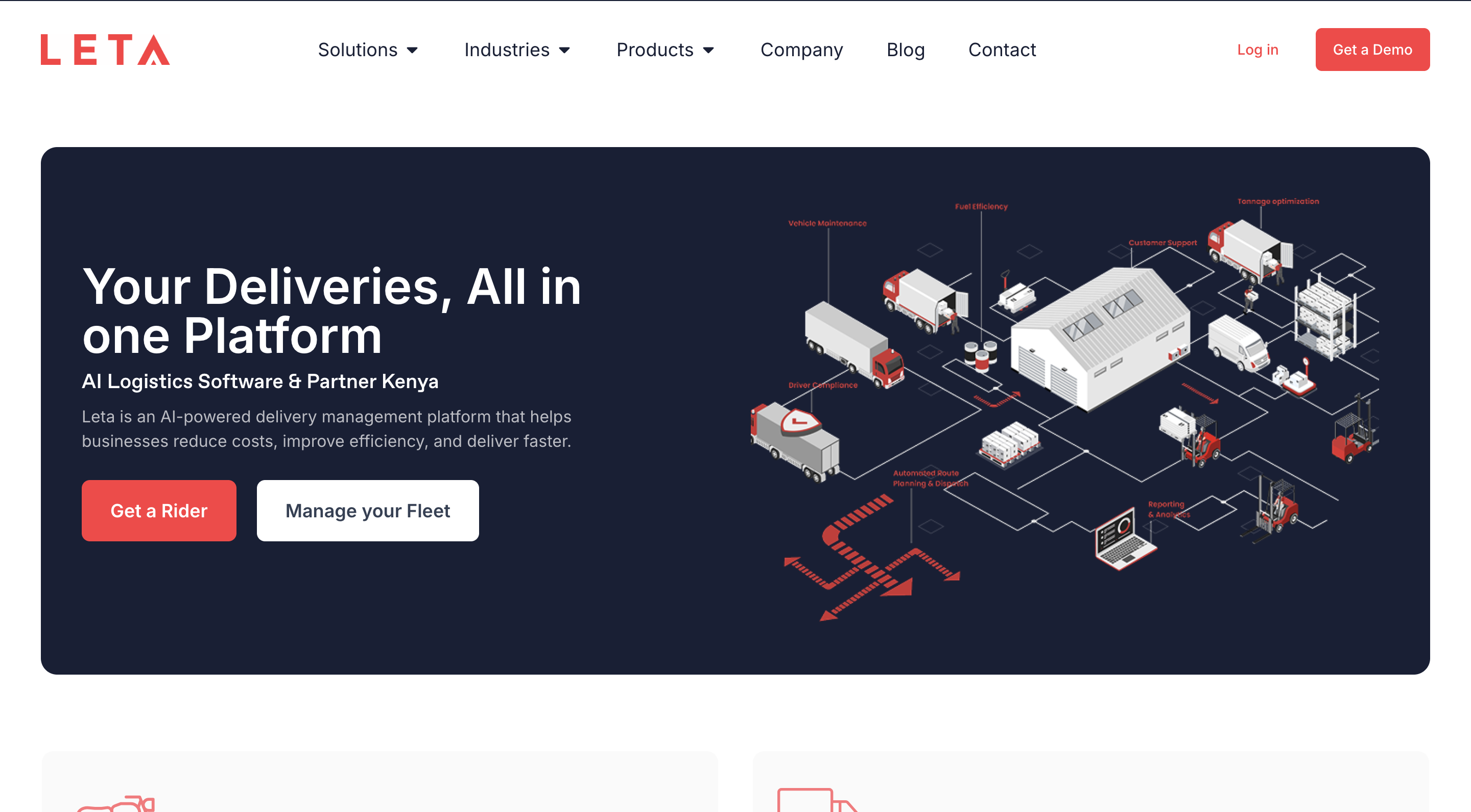
LETA is recognized as a top logistics analytics platform for companies needing high-end, real-time data and automated route optimization. Leta.ai has excelled in emerging markets such as Africa, where it utilizes AI and predictive analytics to optimize routes, dynamically allocate vehicles based on available capacity, and lower the costs of logistics operations.
Key Features
- Route Optimization with AI Technology:
Generates optimal routes based on traffic, load limits, and delivery times to lower fuel consumption and save time.
- Vehicle & Driver Analytics:
Monitors driver performance (fuel usage, etc.), any delays in deliveries, and fuel economy to increase accountability of drivers.
- Full Visibility Throughout a Delivery Process:
Provides customers with the ability to view in real time the status of their orders from the time the dispatcher dispatches the order to the time it is dropped off at the customer’s home or business.
- Optimization of Vehicle Load Limitations:
Optimizes how much each vehicle can be loaded to minimize space and decrease the number of deliveries that have to be made.
Why It’s the Best Choice
Leta.ai provides an effective combination of both powerful artificial intelligence (AI) and strong local market knowledge to provide a practical and cost-effective solution for companies that require both reliable and scalable logistical performance.
The combination of a high degree of local market support along with very powerful artificial intelligence capabilities in Leta.ai, makes it both extremely practical and highly effective.
#2: FourKites
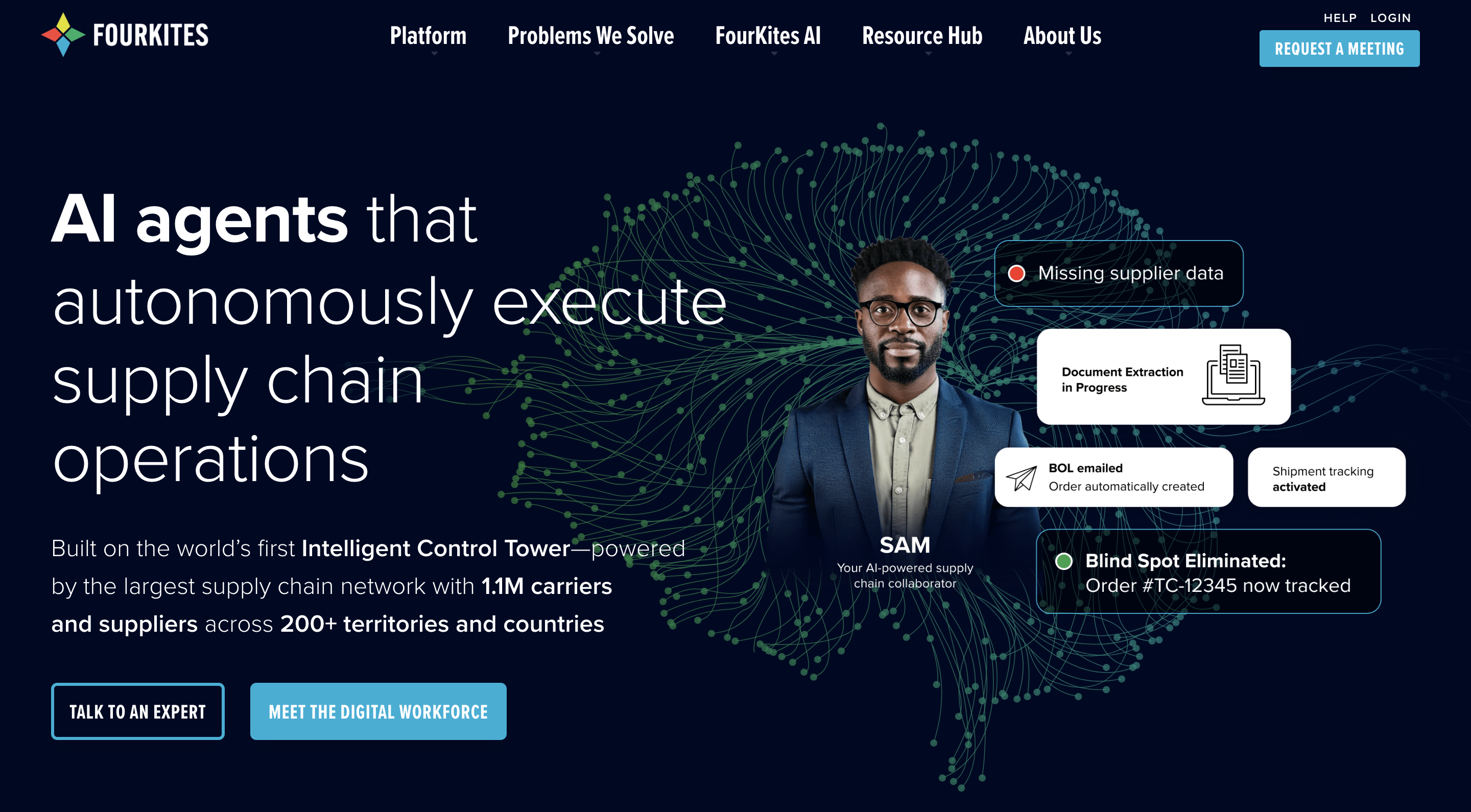
In contrast to many other freight visibility and tracking solutions, FourKites has been successful at providing strong multimodal tracking and is also being heavily used by companies that are shipping internationally. This tool enables logistics professionals to better predict delays as well as be able to see and track their shipments from start to finish on each and every type of transportation method.
Key Features
- Predictive Estimated Times of Arrival (ETAs) for global freight.
- Real-time visibility into all modes of transport, including ocean, air, rail, and road.
- Strong exception management tools.
- Sustainability and carbon impact analytics.
FourKites is a good solution for organizations needing reliable, in-the-moment insight into all their international shipments.
#3: Project44
Project44 is focused on speed and precision to provide the best accuracy in the industry of tracking shipments in real time. It’s generally the go-to solution for large volume shippers that require an extremely detailed view of their shipments from moment to moment.
Key Features
- Precise Real-time Shipment Tracking
Enables real-time tracking of shipments at a very precise level of detail, while providing little to no delay in shipment visibility.
- Carrier Performance Evaluations
Uses scoring systems to evaluate and assist in selecting carriers that best meet your shipping needs.
- Instant Automated Alerts
Provides immediate alerts for when there is a shipment delay or disruption, as well as when the shipping route has changed.
- Built for High-Volume Shipments
Designed for high-volume shippers requiring end-to-end visibility through reliable logistics solutions.
For a higher volume of shipments, Project44 would be a good option as it has better speed and accuracy when it comes to tracking.
#4: SAP Logistics Business Network
SAP TM brings advanced analytics and end-to-end workflow control to large enterprises. It integrates seamlessly with SAP’s broader ecosystem, making it ideal for companies managing complex supply chains.
Key Features
- Single Platform for Supply Chain Management
Combines freight planning, freight execution, warehouse management, and financial processing within a single platform.
- Dashboards for Predictive Planning Analysis
Delivers predictive analysis data on cost forecasts, capacity forecasting, and performance analysis.
- Smooth Integration into the SAP Ecosystem
Works seamlessly with SAP S/4HANA and all other SAP enterprise module applications.
- Freight Analysis and Reporting Tools
Analyzes rate data, route data, load efficiency, and performance data from carriers.
However, for larger companies (enterprises) wanting deeper insights into their logistics and fully integrated with other SAP solutions, SAP TM would be a better fit.
Summing Up
The logistics industry will be a data-driven business with advanced real-time tracking of shipments (visibility), smart routing, and optimized decision-making by using vast amounts of data. Each of these four applications represents the top providers for each function that are required to optimize logistics as follows: Leta.ai is for optimizing routes and fleets, FourKites provides global shipment tracking, Project44 connects carriers, and SAP’s Logistics Business Network is used by very large enterprises.
These four applications will provide the best possible solutions to help businesses optimize their logistics systems, lower their cost structure, and keep pace with the rapid changes happening throughout the supply chain today.